Learn to Swim Programs in Bundaberg
Bundaberg Learn to Swim Programs
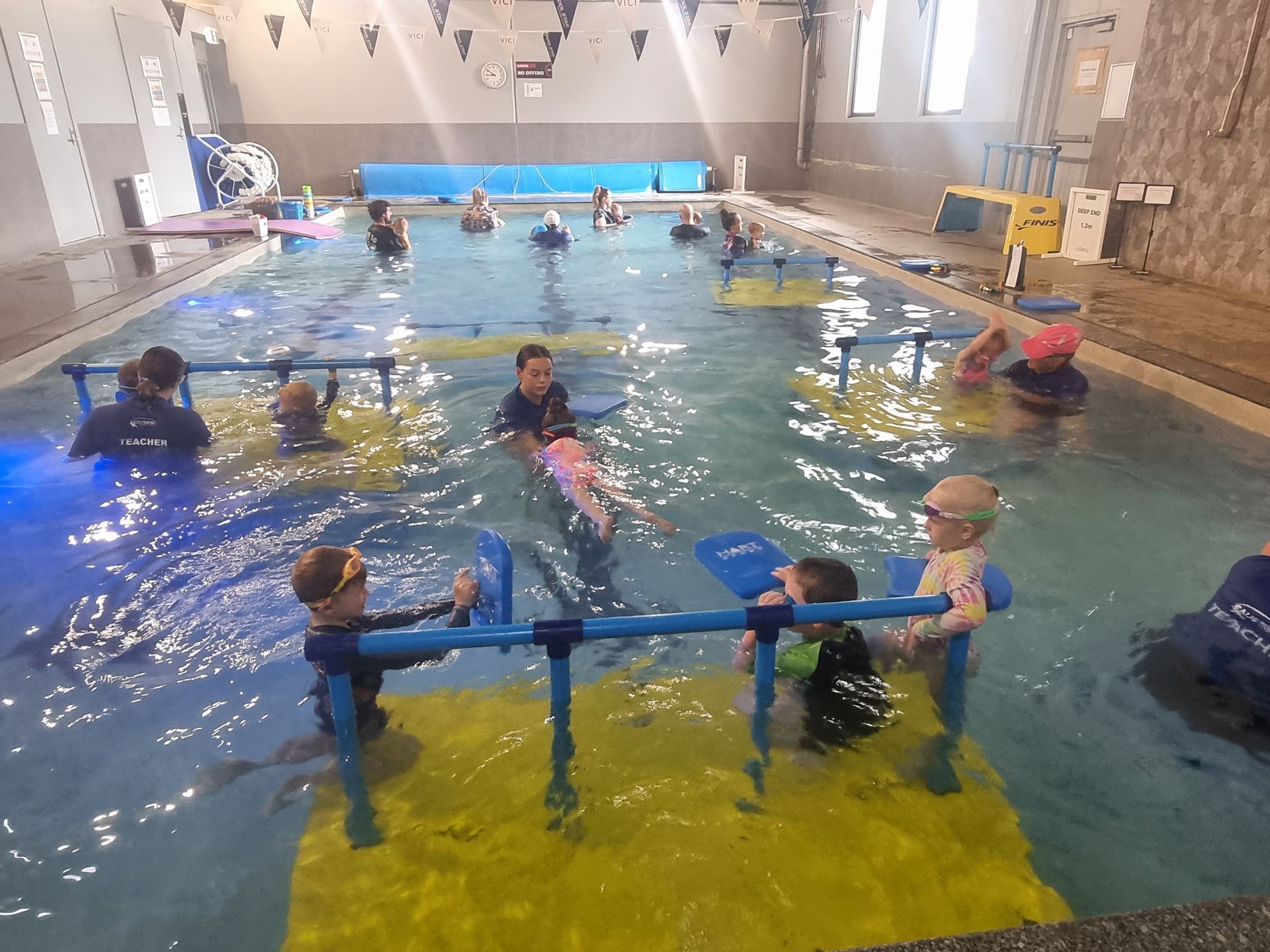
Confidence in the water starts with the right fundamentals, and at DNA Aquatics in Bundaberg, our learn to swim programs are designed to grow with your child. We know every swimmer progresses differently, so our structured levels offer a clear pathway from beginner to strong, capable swimmer.
With a focus on safety, correct technique and fun, each stage introduces new skills like floating, breathing, gliding and stroke development in a supportive and engaging environment. Small class sizes mean our instructors can provide hands-on guidance, helping children build trust in the water and pride in their progress.
Whether your child is just starting out or ready to refine their strokes, our learn to swim programs in Bundaberg are here to support every splash along the way. Take the plunge and contact us to book their spot today.
Learn to Swim (3 Years +)
Progressive levels to develop essential swimming skills with confidence and correct technique.
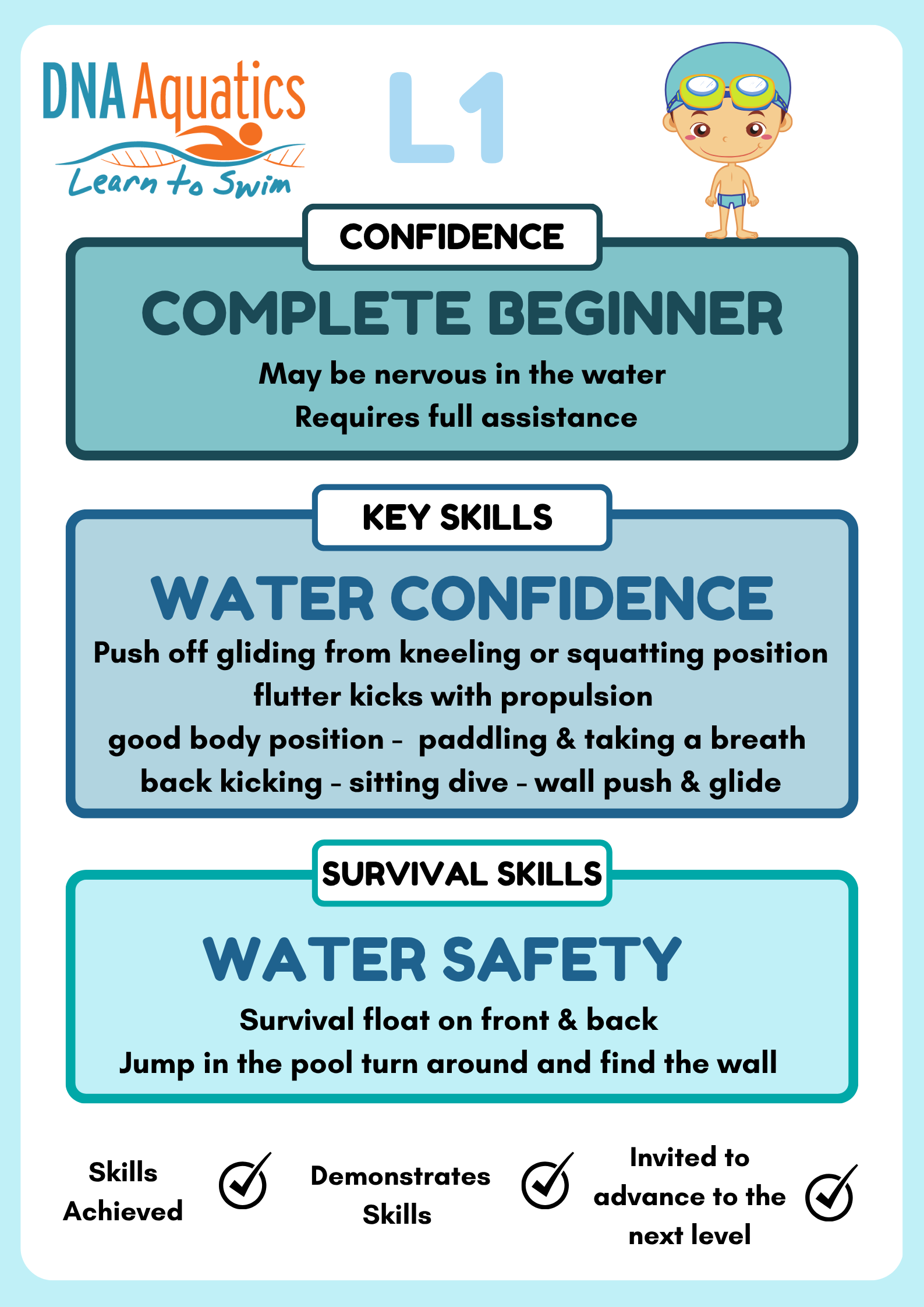
L1 – Complete Beginner
Introduction to water safety, floating and basic propulsion. Perfect for first-time swimmers.
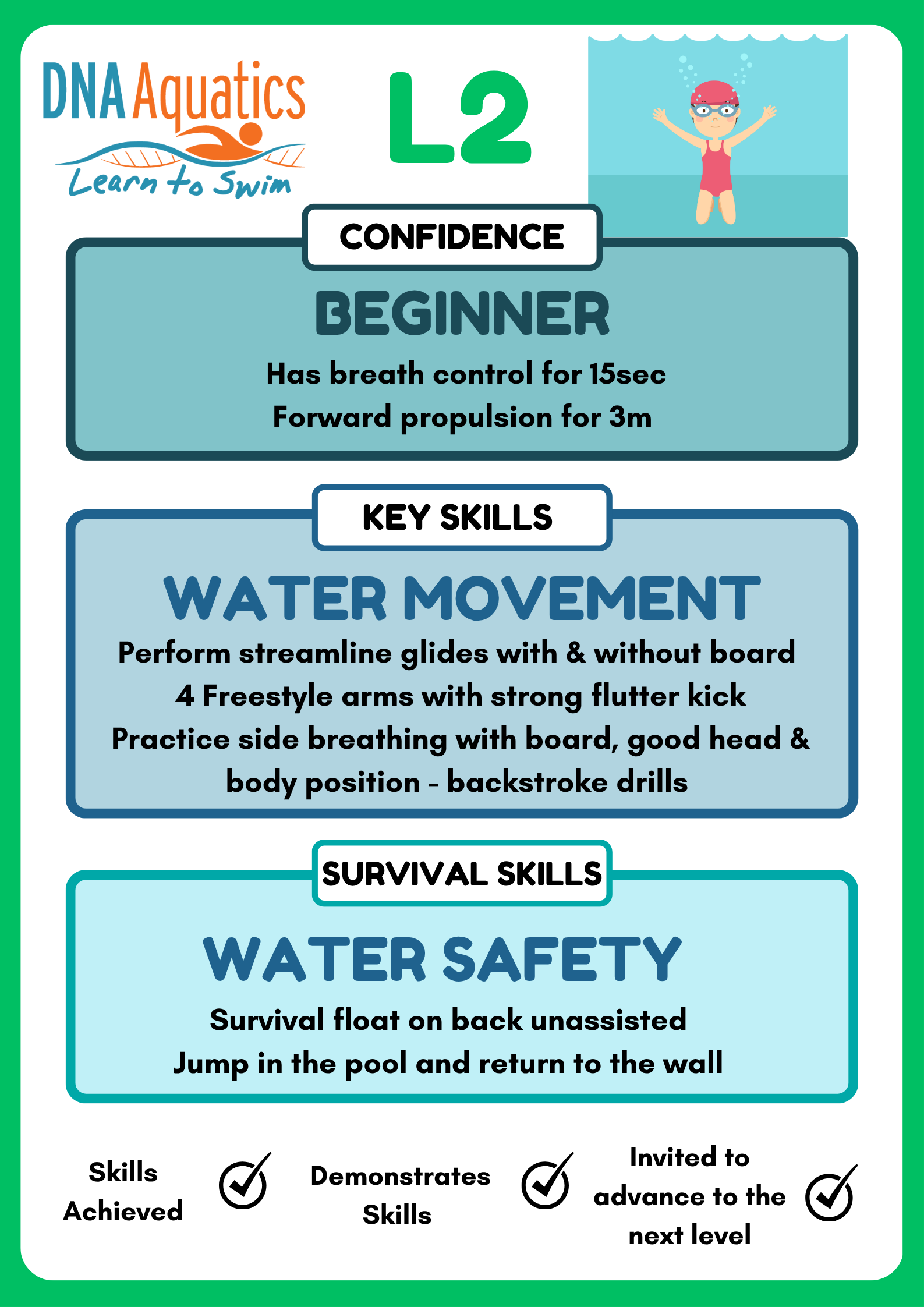
L2 – Beginner
Growing confidence in the water – kicking, paddling, blowing bubbles and learning independence.
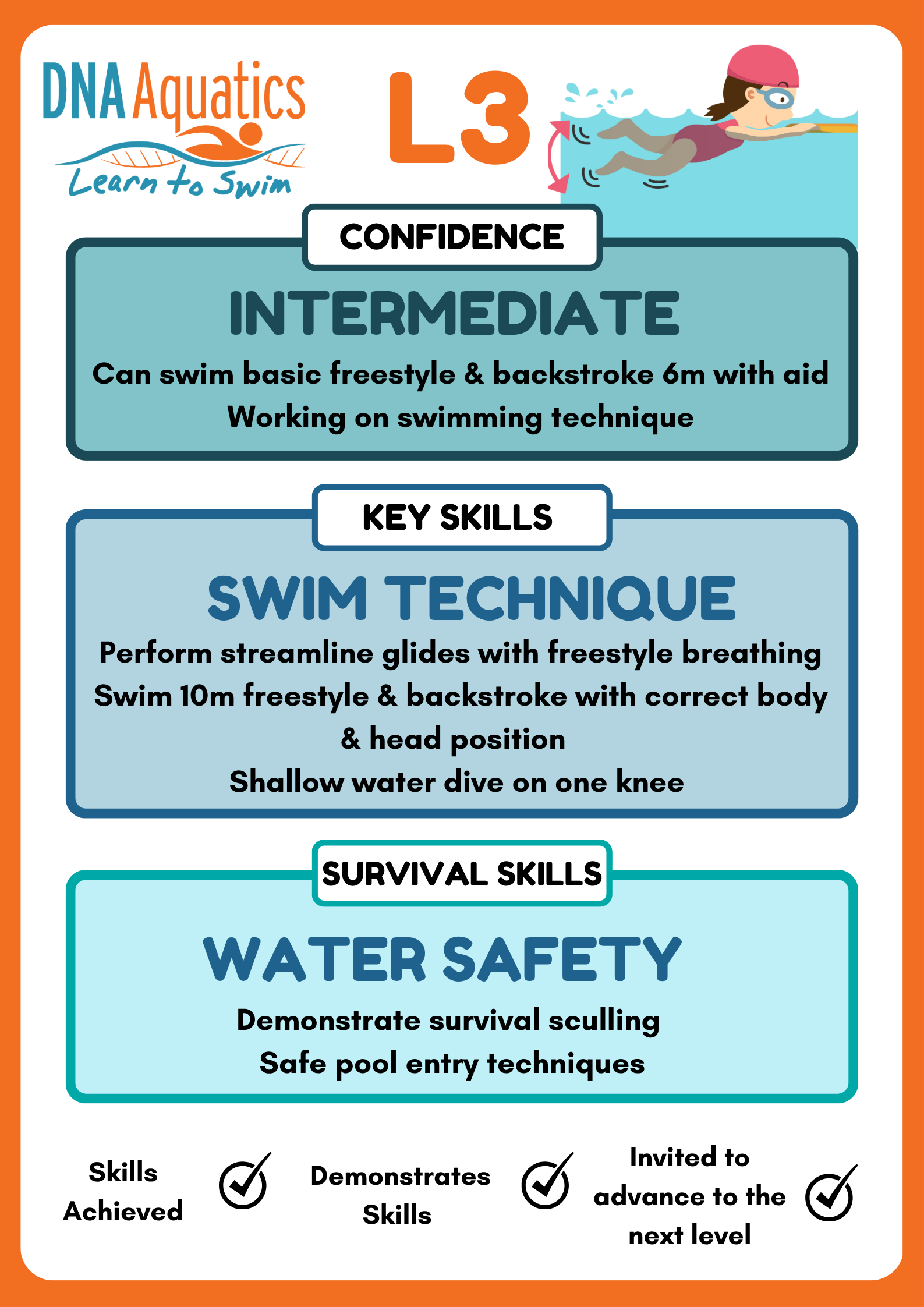
L3 & L4 – Intermediate
Stronger technique across all strokes, learning breathing patterns, streamlining and building endurance.
L5 & L6 – Advanced
Developing competitive stroke skills, endurance training, dives and turns. Prepares swimmers for squad training.
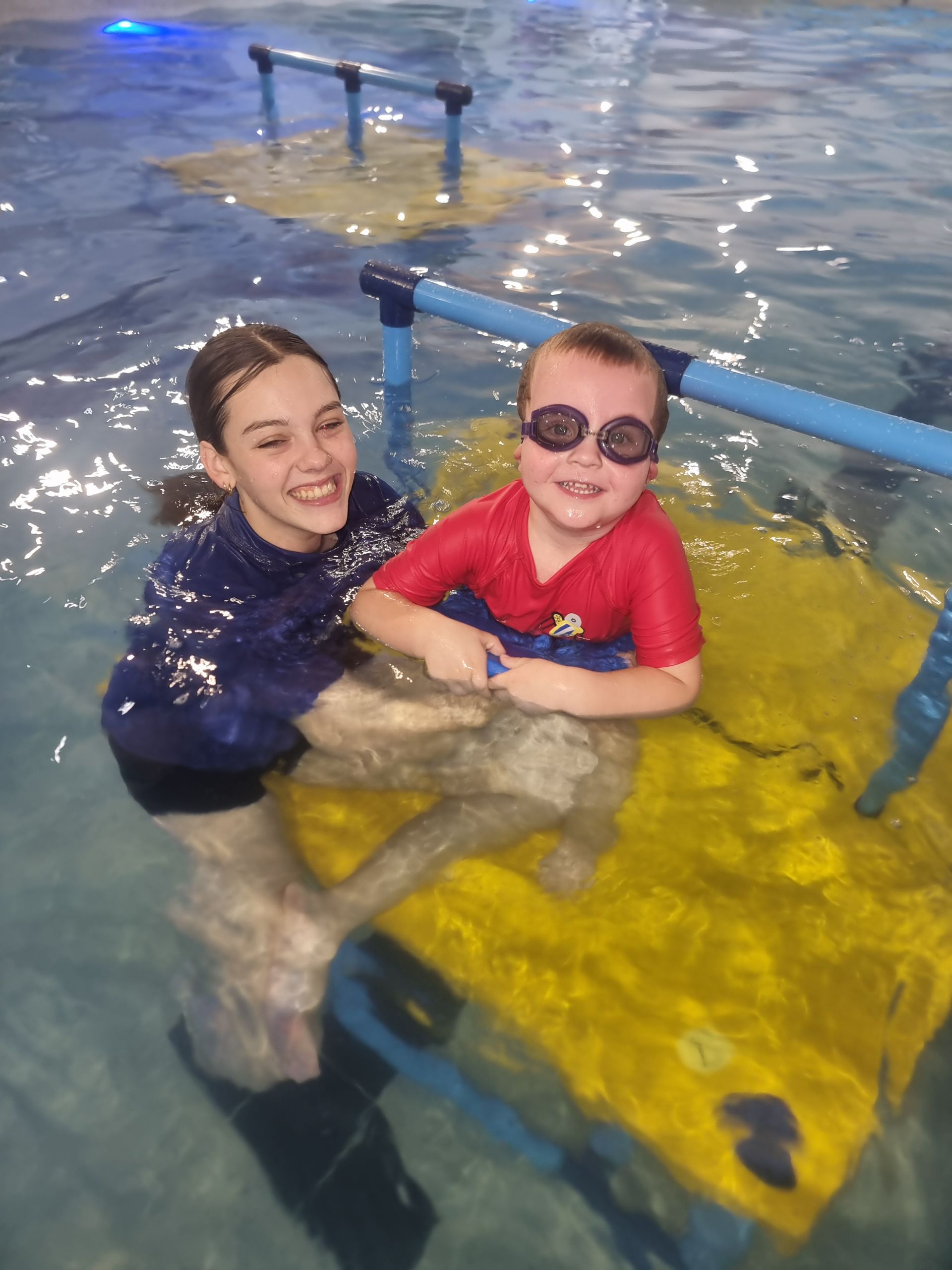
Indoor & Outdoor Pools
AUSTSWIM Teachers
Swimming Lessons
Aqua Fitness Classes
Level 1 Advancement Criteria
- Show a survival float on both front and back.
- Push off and glide from a kneeling or squatting position.
- Demonstrate flutter kicks with good body position and forward movement.
- Use arms and legs together while maintaining body alignment and taking a breath.
- Kick on the back with arms at sides, keeping a good body position.
- Perform a sitting dive, push off the wall and glide.
- Jump in and return to the wall.
Once your child demonstrates all the required skills for this level, they will be invited to advance to the next level.
Level 2 Advancement Criteria
- Perform streamlined glides with and without a board, focusing on breath control.
- Demonstrate 4x freestyle arms with strong flutter kicks.
- Practice side breathing with a board, maintaining good head and body position.
- Perform backstroke drills to improve arm movement and timing.
- Show a survival float drill with arm movements.
- Execute sitting dives into a streamlined position with kicks.
Once your child demonstrates all the required skills for this level, they will be invited to advance to the next level.
Level 3 Advancement Criteria
- Perform streamlined glides with freestyle breathing, with and without a board.
- Swim 10 meters of freestyle, maintaining correct body and head position.
- Swim 10 meters of backstroke with proper technique.
- Demonstrate survival sculling.
- Perform a shallow dive from one knee, maintaining a streamline position.
Once your child demonstrates all the required skills for this level, they will be invited to advance to the next level.
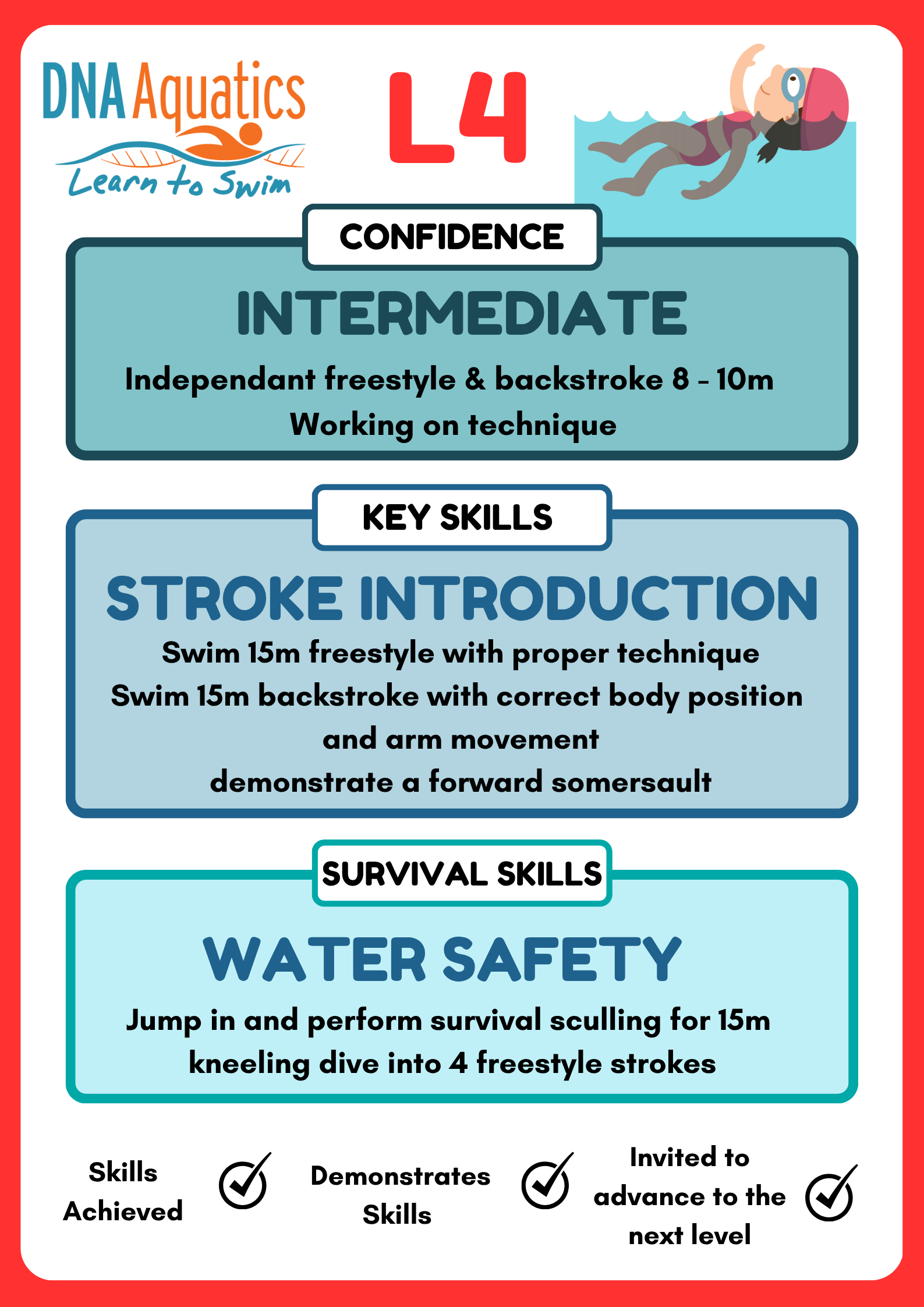
Level 4 Advancement Criteria
- Swim 15 meters of freestyle with proper technique.
- Swim 15 meters of backstroke with correct body position and arm movement.
- Perform a kneeling dive into 4 freestyle strokes.
- Jump in and perform survival sculling for 15 meters.
- Demonstrate a forward somersault in the water.
Once your child demonstrates all the required skills for this level, they will be invited to advance to the next level.
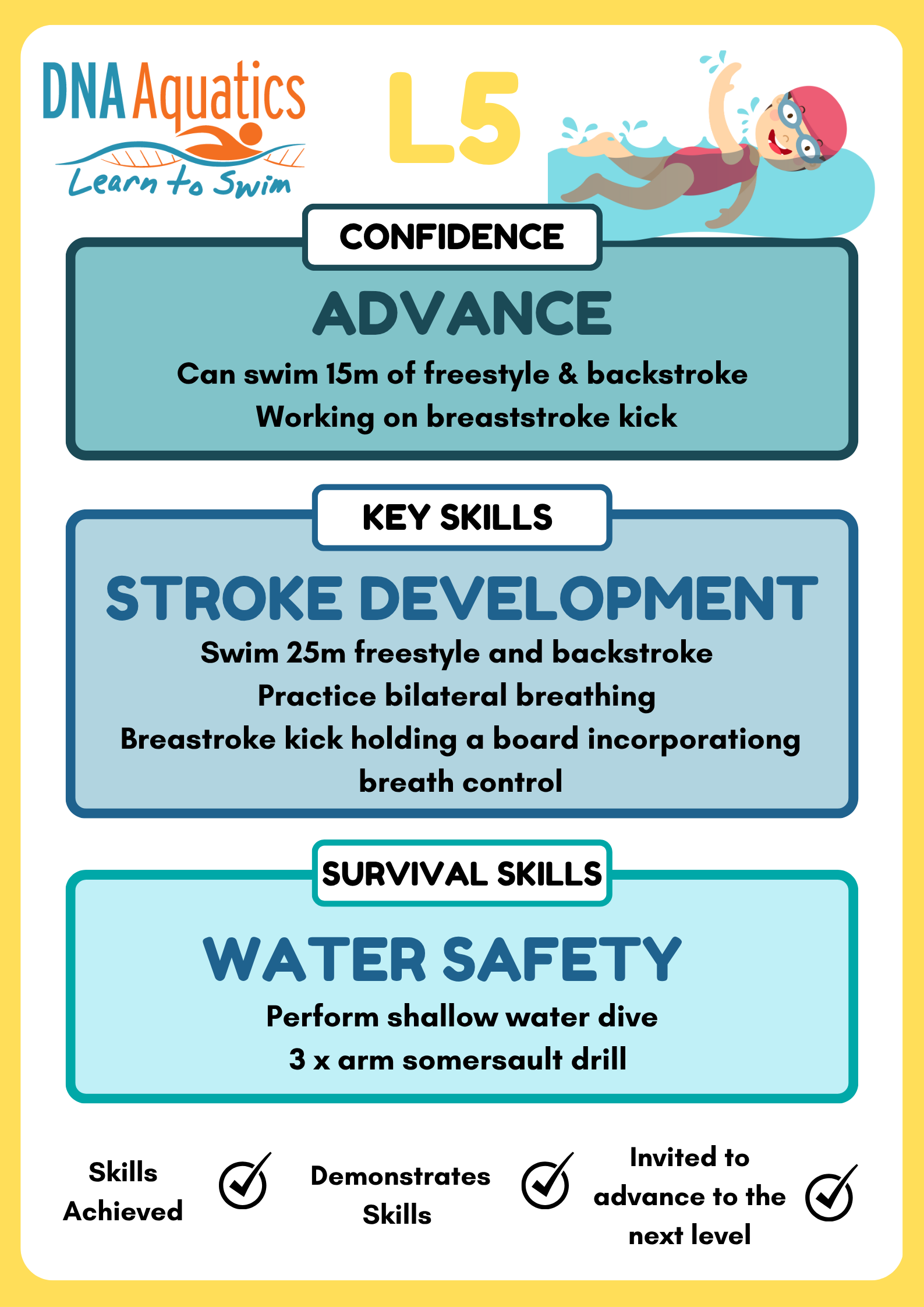
Level 5 Advancement Criteria
- Swim 25 meters of freestyle with good body position.
- Practice bilateral breathing every four strokes.
- Swim 25 meters of backstroke with proper technique.
- Perform a 3x arm somersault drill with controlled breathing.
- Execute breaststroke kick with a board, incorporating breath control.
- Perform shallow dives.
Once your child demonstrates all the required skills for this level, they will be invited to advance to the next level.
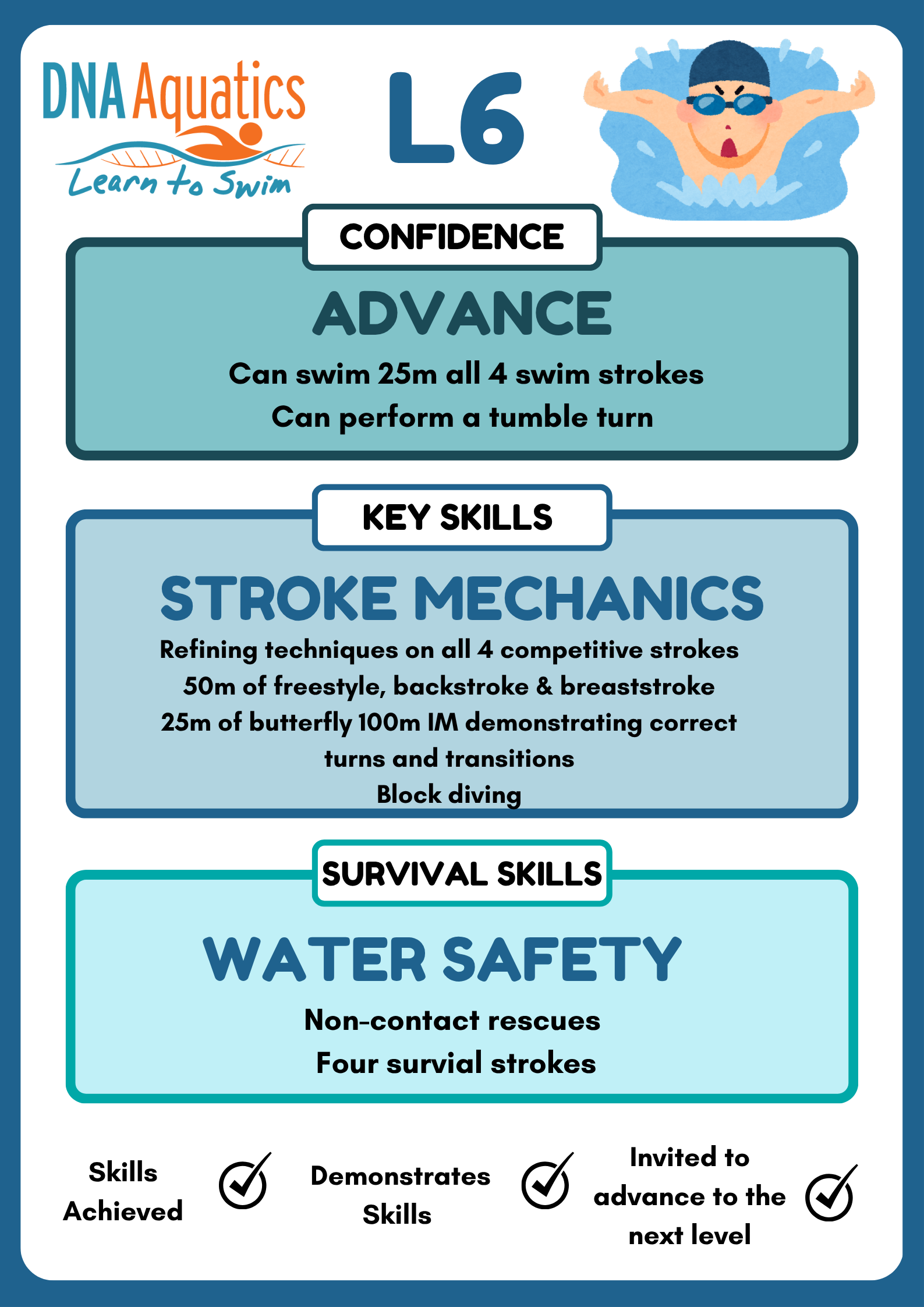
Level 6 Advancement Criteria
- Swim 50 meters of freestyle, backstroke, and breaststroke.
- Swim 25 meters of butterfly.
- Complete a 100-meter IM, demonstrating proper turns and transitions.
- Perform shallow dives.
- Practice tumble turns off the wall.
What age should a child start swimming lessons?
Children can start swimming lessons from as early as six months, but formal learn to swim programs often begin around age three. At this stage, children can follow instructions, gain water confidence and begin learning structured swimming skills like floating, kicking and basic stroke techniques in a safe environment.
How long does it take for a child to learn to swim?
The time it takes to learn to swim varies based on age, frequency of lessons and individual comfort in water. On average, children may need one to two years of weekly lessons to become confident swimmers. Progress is gradual, with a strong focus on technique, safety and consistency.
What are the stages of learn to swim programs?
Learn to swim programs are typically broken into progressive levels. Early stages focus on water safety, floating and kicking. As children advance, they develop correct stroke technique, breathing skills and endurance. Higher levels prepare swimmers for pre-squad or competitive training with more complex drills and distance targets.